.webp)
The Spike Changes Everything: Time, Territory, and Power Inside a VALORANT Round
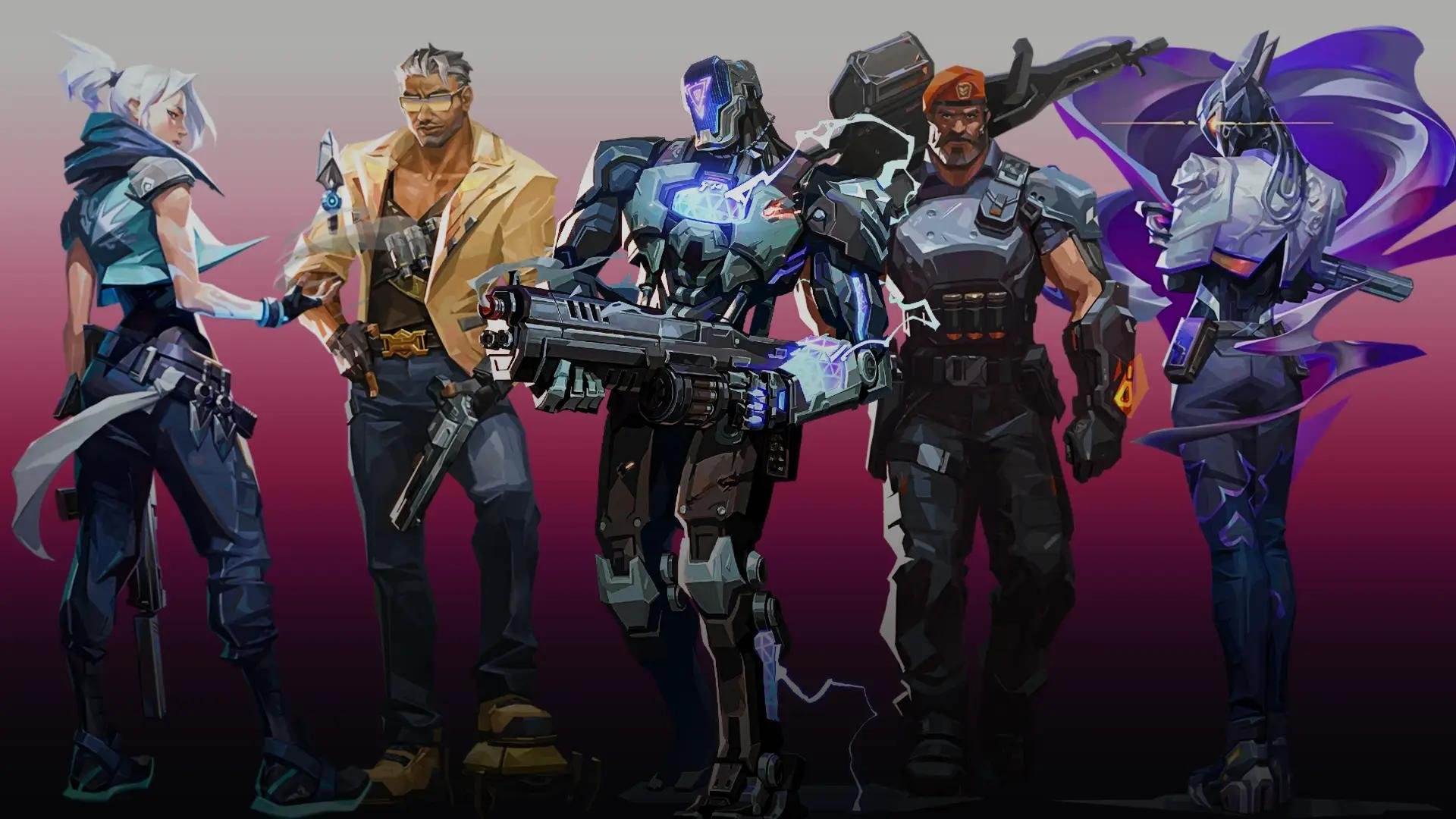
A VALORANT round can change direction without anyone firing a shot. A defender hears movement near an entrance and abandons a position. An attacker disappears from one side of the map, leaving an opponent uncertain about the next destination. A player begins planting the Spike, and suddenly every surviving participant faces a different set of obligations. These moments reveal the game’s deeper structure: gunfights matter because they alter who can occupy space, what each team knows, and how much time remains available to act.
The Spike gives those relationships a destination. In the game’s standard attack-and-defense format, attackers seek to plant it and secure its detonation, while defenders seek to prevent that outcome or defuse it after the plant. That simple objective creates a round with distinct phases, each governed by a different balance of initiative and responsibility. Riot’s official introduction establishes this underlying contest; the analysis below examines what it means for the experience of playing and watching VALORANT.
Following a round from preparation to its economic aftermath reveals why the game can feel methodical, explosive, and psychologically exhausting within the same sequence. The central drama lies in the changing ownership of time. Before the plant, attackers must produce an opportunity. Afterward, defenders must produce an answer. Between those conditions sits a brief, vulnerable action that transforms the meaning of almost every position on the map.
1. Before Contact: The Round Begins as a Contest of Possibilities
Equipment Purchases Establish Future Commitments
The preparation phase contains the earliest expression of the round’s central conflict. Weapons and abilities determine which possibilities a team can credibly threaten once the barriers disappear. A rifle supports a different relationship with distance from a shotgun; an expensive long-range weapon encourages opponents to respect certain lanes before its position is confirmed. Utility purchases similarly shape the future. A team with several ways to obscure vision can threaten a coordinated entrance, while a depleted collection of abilities may leave it more dependent on individual engagements. These are commitments made before either side possesses reliable information about the opponent’s exact arrangement. The round therefore begins with investment under uncertainty, and every investment suggests a preferred sequence of events.
The Spike Creates Unequal Starting Responsibilities
Attackers and defenders enter that uncertainty from structurally different positions. Defenders begin with access to the areas attackers eventually need, but they must distribute attention across possible destinations. Attackers begin with the freedom to choose a direction, yet that freedom has an expiration date: they must eventually turn movement into a successful objective action. The Spike carrier embodies this tension. Carrying the objective does not automatically make a player the team’s strongest combatant or its central decision-maker, but it links that player’s location to the team’s immediate capacity to finish an attack. A distant teammate may threaten a flank, gather information, or occupy defenders; the Spike still needs a practical route to a plant site.
Prepared Plans Depend on an Unseen Opponent
Before contact, each team is effectively imagining several rounds at once. Defenders consider an immediate rush, a slow advance, a split attack, and a misleading opening. Attackers consider resistance at the entrance, an aggressive defensive push, or a site deliberately left lightly occupied. Preparation gives shape to these imagined futures without resolving them. This makes the opening phase intellectually dense even when the screen appears quiet. A team is deciding which uncertainty it can tolerate and which uncertainty it must investigate. The value of an opening position consequently extends beyond its chance of producing a kill: it can preserve several responses, expose an assumption, or commit a player to a narrow version of the round before the opponent has revealed much.
2. The Opening Seconds: Information Acquires a Price
Contact Converts Possibility into Evidence
Once the barriers fall, abstract expectations begin colliding with evidence. Footsteps establish that someone moved through a particular area. A projectile reveals that an ability was committed, although it may not establish the full number of players supporting it. A defender appearing aggressively in one lane exposes a local threat while potentially suggesting reduced coverage elsewhere. None of these observations automatically explains the entire round. Their importance lies in narrowing the range of plausible situations. VALORANT’s opening exchanges are therefore transactions involving information as much as health. Players spend ammunition, abilities, positional secrecy, or personal safety to learn something about the opponent’s arrangement. Even a confrontation without a casualty can substantially change what both teams believe they are allowed to do.
Gathering Information Can Destroy Secrecy
Information rarely arrives without a corresponding disclosure. An attacker who pressures an entrance may identify a defender’s weapon and position, but the defender also learns that the entrance matters enough to attract attention. A defensive push can confirm that a section of the map is empty while leaving the pushing player vulnerable to a delayed opponent. This reciprocal exposure explains why apparently cautious behavior can carry considerable strategic weight. Refusing to reveal a position preserves ambiguity for teammates elsewhere. Conversely, an early reveal may be worthwhile if it forces several opponents to slow down or spend resources. The relevant exchange involves what is learned, what is surrendered, and whether either side can turn that knowledge into a useful action before it becomes outdated.
The First Kill Alters the Burden of Proof
An opening elimination makes these information exchanges more consequential because it changes how much uncertainty the surviving players can cover. A team with fewer bodies has fewer simultaneous viewpoints and fewer opportunities to support separate positions. However, the first kill does not carry a fixed strategic meaning. Its value depends on where it happens, what territory becomes accessible, whether a weapon can be recovered, and whether the opponent can immediately answer. An attacker eliminated far from the Spike may leave the main attack viable; the Spike carrier falling in contested ground can impose an entirely new recovery problem. The scoreboard records one casualty in either case, while the round’s practical possibilities may change very differently.

3. Early Map Control: Territory Becomes a Form of Evidence
Space Matters Through Its Connections
After the first exchanges, territory becomes increasingly valuable because it determines which futures remain available. A corridor is useful when it connects an attacker to another entrance, allows a defender to observe a rotation, or provides a route into an opponent’s rear. Its worth cannot be separated from the surrounding network. Riot’s account of Ascent describes a foundational three-lane layout with mechanical doors that alter connections. That design illustrates how a map can generate strategic variation through relationships between spaces, rather than through the visual identity of any single room or courtyard. Control matters because it changes who can arrive, from where, and with what warning.
Occupation and Control Are Different Conditions
A player standing inside an area does not necessarily control it in a durable sense. Their position may depend on a temporary smoke, a teammate watching an adjacent route, or an opponent choosing not to challenge. Control is therefore relational and conditional. It can mean safe passage, reliable observation, credible denial, or simply enough uncertainty to discourage enemy movement. These forms overlap without being identical. An attacker hidden near a rotation path may exert influence without revealing a presence, while a visibly occupied entrance may remain impossible to cross safely. Thinking about territory this way explains why teams sometimes spend significant resources establishing positions that do not immediately lead to a plant. They are changing the conditions under which a later commitment becomes possible.
Abandoned Space Can Still Shape Behavior
Territory also retains a psychological afterlife. An opponent who recently encountered resistance may continue respecting an area after its defender has withdrawn. A route that was dangerous seconds earlier can remain dangerous in the enemy’s mental model, even when it has become physically empty. This gap between actual and perceived control gives map movement much of its tension. Teams operate on delayed, incomplete descriptions of the battlefield, so a position can influence behavior beyond the duration of its occupation. The reverse is equally important: a supposedly secure flank can become vulnerable once the information supporting that confidence expires. Map control is consequently a temporary claim that requires maintenance, and both teams are constantly deciding which claims deserve to be trusted.
4. The Mid-Round: Rotations Turn Knowledge into a Gamble
Movement Carries an Opportunity Cost
As the opening settles, the central question becomes where each team should concentrate its remaining strength. A rotation promises additional presence at one destination by reducing presence somewhere else. That exchange can be favorable, necessary, or disastrous depending on the quality of the information behind it. Defenders who move toward a threatened site may create the exact weakness attackers were waiting to exploit. Attackers who abandon an entrance may escape a difficult confrontation while surrendering the territory and time already invested there. Movement therefore carries accumulated costs. It is not simply a change of location; it is a decision about which previous commitments still matter and which future opportunities justify leaving them behind.
A Fake Attacks the Opponent’s Interpretation
A convincing fake functions by creating evidence that supports the wrong conclusion. Noise alone may attract attention, but the stronger pressure comes from actions that resemble a genuine commitment: meaningful utility, sustained contact, or a player presenting a threat that cannot be ignored cheaply. The defending team must interpret those signals while remembering that deception is possible. This produces a difficult asymmetry. Waiting for certainty can mean arriving too late to help a teammate, while moving on incomplete evidence can leave another destination exposed. The fake’s power comes from exploiting that decision problem. Its success may appear effortless when the actual attack reaches an empty site, although the decisive confrontation occurred earlier inside the defenders’ interpretation of events.
Delay Changes the Meaning of the Same Information
Identical observations can demand different responses at different stages of the round. Early movement near a site may represent exploration; comparable movement near the end of the available attack time can indicate a much more urgent commitment. The clock therefore changes the credibility of threats. As time decreases, attackers lose the freedom to investigate, retreat, and restart elsewhere, while defenders can increasingly evaluate what remains physically achievable. Yet urgency also creates opportunities for surprise because defenders may overcommit to an apparently inevitable destination. The mid-round is compelling precisely because information and timing cannot be evaluated separately. A location report describes a past moment, and its usefulness depends on how far the players involved could have moved since that report was made.
5. The Site Execute: Utility Compresses the Defender’s Choices
Abilities Change the Terms of Engagement
When attackers commit to a site, abilities become instruments for narrowing the defender’s available responses. Vision obstruction can separate one defender from another. A flash can make maintaining an angle temporarily dangerous. Reconnaissance can undermine concealment, while damaging utility can make a particular patch of ground costly to occupy. These effects matter through their interaction with movement and gunfire. An isolated smoke does not guarantee passage; it changes what can be seen and what must be anticipated. An execute becomes threatening when its components create overlapping problems that cannot all be answered comfortably at once. The defender may understand the attack perfectly and still lack enough time, safe space, or supporting angles to resolve each threat.
Entry Creates Space for Someone Else’s Action
The first attacker crossing into a site experiences the sharpest version of that uncertainty. Multiple possible angles must be considered, and defenders can exploit cover or elevation to complicate the encounter. Yet the entry player’s significance extends beyond personal survival. Their movement can reveal positions, displace crosshairs, and allow teammates to establish trades or reach planting ground. This makes the execute a collective event whose individual statistics can be misleading. A player who falls immediately may still have enabled a successful occupation; a player who survives at the entrance may have contributed less if the team never gains usable space. The objective requires a specific kind of territorial transformation: ground that was hostile must become sufficiently stable for the Spike carrier to perform a vulnerable action.
Defensive Withdrawal Preserves Another Version of the Round
Defenders do not always need to contest the initial occupation until death. Sometimes surviving beyond the first wave preserves bodies and abilities for a later retake. That choice changes the shape of the round by conceding an immediate objective opportunity in exchange for a potentially stronger response. Its logic depends on what remains recoverable. A defender escaping into a connected route may join teammates and create a coordinated return; one trapped in a disconnected corner may merely postpone an unfavorable fight. The execute thus contains competing judgments about when territory is worth a life. Holding ground, surrendering it, and contesting its edges are different ways of investing in the final outcome, each conditioned by the evolving arrangement of surviving players.

6. The Plant: A Brief Action Rewrites the Entire Round
The Objective Demands a Moment of Vulnerability
Planting creates a distinctive interruption in the flow of combat. A player who has been moving and fighting must commit attention to the objective, making the surrounding team responsible for protecting that interval. Site occupation is therefore incomplete until it can support the plant itself. Attackers may have eliminated a defender and crossed the entrance yet still lack the security needed to finish the action. Remaining sightlines, hidden opponents, and incoming utility can keep the objective inaccessible. This distinction explains why the final meters of an execute can be more consequential than the opening breach. The team must convert an unstable advantage into a completed state change while the defenders retain opportunities to interrupt that conversion.
Plant Location Determines Future Relationships
Where the Spike is planted influences the geometry of the next phase. A location sheltered during the plant may also shelter a future defuser from attackers positioned elsewhere. An exposed location may create stronger lines of sight for surviving attackers while making the initial action harder to protect. These tensions make the plant an architectural decision with immediate consequences. Its relationship to cover, entrances, elevated viewpoints, and escape routes determines which positions can meaningfully influence the objective. The relevant question is larger than whether the plant completes. A completed plant establishes a new focal point, and the remaining players must reorganize around the specific visibility and access conditions that focal point creates.
Initiative Changes Sides Without Moving the Teams
The completed plant reverses the round’s principal obligation. Attackers no longer need to force an objective action within the original round clock; defenders must now reach and defuse the Spike before detonation. The teams may occupy nearly identical positions before and after completion, yet the meaning of those positions changes immediately. A distant attacker becomes a potential source of delay. A defender holding a safe angle may need to abandon it and advance. Survival becomes sufficient for some players only when it supports the objective’s continued operation. This is the round’s clearest structural pivot: an action lasting a brief interval can transform waiting from a liability into an advantage and turn previously comfortable defensive space into an urgent departure point.
7. The Post-Plant: Survival Gains a Different Kind of Value
The Objective Redefines Useful Aggression
After the plant, an attacker’s aggressive move must be understood through its effect on the defenders’ remaining work. A kill can remove a retaking opponent, but an unnecessary death can also erase a critical sightline or release pressure from the Spike. The value of combat therefore becomes especially sensitive to timing and location. A duel taken far from the objective may be decisive if it blocks the defenders’ only approach; the same duel may be irrelevant if another defender is already defusing. This phase exposes the limits of measuring impact through eliminations alone. The winning action may be a shot, a reposition, an ability, or simply remaining alive in a position the opponent cannot safely disregard.
Distance Offers Protection and Creates Dependence
Attackers who move away from the planted Spike gain certain forms of security while surrendering others. Distance may make them harder to isolate, preserve a long sightline, or allow an ability to affect the objective from elsewhere. It can also make their influence dependent on teammates, sound, timing, or a narrow route back into contact. A remote position is powerful only while its connection to the objective remains functional. If vision is blocked or the defender approaches from an unexpected direction, apparent safety can become practical irrelevance. Post-plant arrangements are consequently networks of mutual dependence. Each surviving player covers part of the information and control problem, and a single lost connection can expose the entire arrangement.
Delay Accumulates Even Without Visible Damage
The post-plant phase makes the value of delay unusually legible. A defender forced to clear another angle, wait out an obstruction, or check a possible flank spends time that cannot be recovered. Damage can contribute to that delay without producing a kill, and the threat of an ability can shape movement before the ability is actually used. This creates a different rhythm from the opening of the round. Earlier hesitation preserved options; now hesitation consumes the defenders’ shrinking opportunity to complete the objective. Attackers can benefit from uncertainty itself, provided they maintain enough credible influence to prevent a straightforward defuse. The planted Spike converts every unresolved question into a potential burden on the returning team.
8. The Retake: Defenders Must Reconstruct a Broken Map
Former Territory Becomes Hostile Territory
A retake asks defenders to enter areas whose meaning has changed since they last occupied them. Familiar cover may conceal an attacker. A previously safe doorway may now sit inside a crossfire. Teammates arriving from separate routes can possess different fragments of information, none sufficient to describe the whole site. This is why the retake is more than a delayed repeat of the original defense. The defenders are reconstructing a usable map from partial observations while the objective continues progressing against them. Every clearing action competes with the time needed for the defuse itself. The pressure comes from this overlap: the team must establish enough certainty to act while accepting that complete certainty may never become available.
Coordination Determines Whether Numbers Become Strength
Several surviving defenders do not automatically create a powerful retake. Their numerical advantage matters when their actions interact: one approach draws attention while another threatens a different angle, or an ability enables multiple players to enter contested space. If defenders arrive separately, attackers can experience those encounters as a series of manageable local fights. The difference lies in whether pressure is simultaneous enough to restrict the attackers’ choices. Yet waiting for synchronization also consumes time. A retake therefore contains an internal tension between preparation and urgency. More organization can improve the confrontation, but the opportunity to benefit from it shrinks continuously. This makes coordination visible as a resource with a cost, rather than an unlimited virtue.
The Defuse Makes Attention a Shared Resource
Once a defender begins interacting with the Spike, the retake’s collective responsibilities become explicit. One player commits to the objective while others must account for surviving attackers, incoming utility, and possible changes of angle. The player defusing cannot independently solve every threat without interrupting the action that gives the retake its purpose. Meanwhile, attackers must determine whether the interaction is a genuine commitment, an attempt to provoke a reveal, or a temporary action supported by another defender’s position. The resulting confrontation is about attention allocation as much as aim. Every player is deciding which danger deserves immediate focus, and the planted objective ensures that postponing the wrong problem can make even a won gunfight arrive too late.
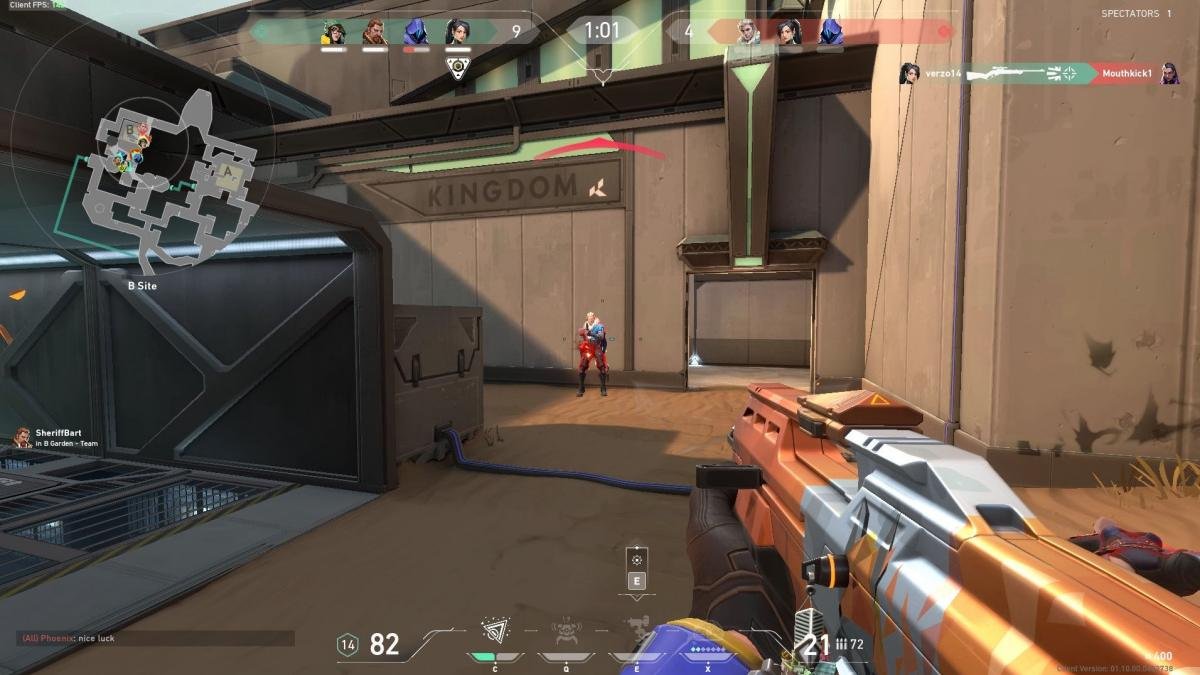
9. The Final Duel: The Clock Becomes an Invisible Third Participant
Identical Weapons Can Carry Unequal Obligations
A final one-against-one encounter appears to simplify the round, but it often intensifies the objective’s asymmetry. Two players may have comparable weapons and health while facing radically different requirements. The attacker may need only to preserve the Spike’s progress, whereas the defender must locate the threat, survive it, and complete the defuse. Distance, cover, and remaining time can therefore matter more than the superficial equality of the matchup. A position that would be weak in an unrestricted duel can become powerful when the opponent must approach a specific object. The clock behaves like an additional participant because it continuously pressures one player’s choices while allowing the other to derive value from inaction.
Sound Creates Evidence Without Explaining Intent
At this stage, a small sound can carry the weight previously distributed across multiple players’ observations. Movement may suggest a reposition. Gunfire may reveal an angle. The start of a defuse establishes interaction with the objective without necessarily establishing how long the defender intends to continue. Each cue must be interpreted within the physical possibilities of the situation. The attacker cannot assume every sound requires immediate exposure, yet ignoring a genuine defuse can lose the round. The defender may seek to draw a response while remaining vulnerable to the consequences of stopping. What looks like a simple exchange of peeks becomes a compressed argument conducted through incomplete evidence, with the shrinking clock limiting how many interpretations can be tested.
A Clutch Is Often the End of an Earlier Decision
The final confrontation attracts attention because its result is immediate and visible. However, its conditions were usually created much earlier. The plant location determines which angles matter. Earlier utility expenditure determines which interruptions remain possible. A teammate’s death may have removed the only source of information about an approach. A rotation may have left the surviving defender too far away to investigate safely. The clutch concentrates these accumulated consequences into a moment that appears individual. Mechanical execution remains essential, but it operates inside a situation inherited from the whole round. Recognizing that inheritance gives the final duel greater analytical depth: the last player is resolving a problem whose most important boundaries may have been established before they became the last player alive.
10. After the Outcome: The Spike Leaves an Economic and Psychological Afterlife
The End of One Round Shapes the Beginning of Another
A round’s consequences extend beyond the announcement of victory or defeat. Surviving equipment, lost weapons, and the resources available for the next purchase phase influence what both teams can credibly attempt afterward. This continuity gives the decision to retreat or save equipment a significance that the immediate objective cannot fully explain. A team may recognize that the remaining retake is unlikely to succeed and preserve resources for a later round. An opponent may pursue those surviving weapons to weaken the next defense, accepting some additional exposure in the process. The Spike’s immediate contest therefore connects to a longer economic struggle in which present actions alter future possibilities, even when the current round’s result already appears settled.
Repeated Patterns Turn Memory into Pressure
The psychological consequences are equally persistent. A successful fake can make defenders slower to trust the next apparent commitment. A repeated flank can force attackers to reserve attention for a route they previously ignored. A plant repeatedly protected from the same distant position can change how defenders approach later retakes. Teams gradually build expectations about each other, and those expectations become another field of competition. Riot’s discussion of Split’s development describes the difficulty of balancing influential off-site positions against the need to keep combat connected to objective sites. That design tension helps explain the larger pattern: power must remain connected to the objective to matter, but the routes and expectations surrounding it can extend far beyond the site itself.
Conclusion: The Spike Organizes VALORANT’s Meaning
The Spike gives VALORANT a changing structure of responsibility. Preparation establishes possible futures; opening contact tests them; map control and rotations determine which remain practical. The execute creates an opportunity to plant, and the plant reverses the pressure of the round. Post-plant positioning, retake coordination, and the final duel then resolve a contest whose boundaries have been developing since the first purchase. Across those phases, time, territory, and information continually change value. A safe position can become useless, a dangerous action can become necessary, and survival can matter more than another elimination. This is the source of the game’s distinctive tension: every shot belongs to a larger struggle over who must act next, what they can know, and whether enough time remains to make that knowledge useful.