
Chill with You : Lo-Fi Story does not attempt to compete with traditional games through challenge, mastery, or progression systems. Instead, it questions a deeper assumption: that games must constantly demand action. At first glance, it appears to be a simple lo-fi experience centered around atmosphere, music, and companionship. However, beneath its minimalist surface lies a carefully structured design philosophy that transforms waiting, observing, and existing in time into meaningful player interaction. This article explores how the game’s deliberate use of passivity and temporal pacing reshapes the concept of agency, emotional engagement, and narrative presence in interactive media.
1. The First Session and the Absence of Urgency
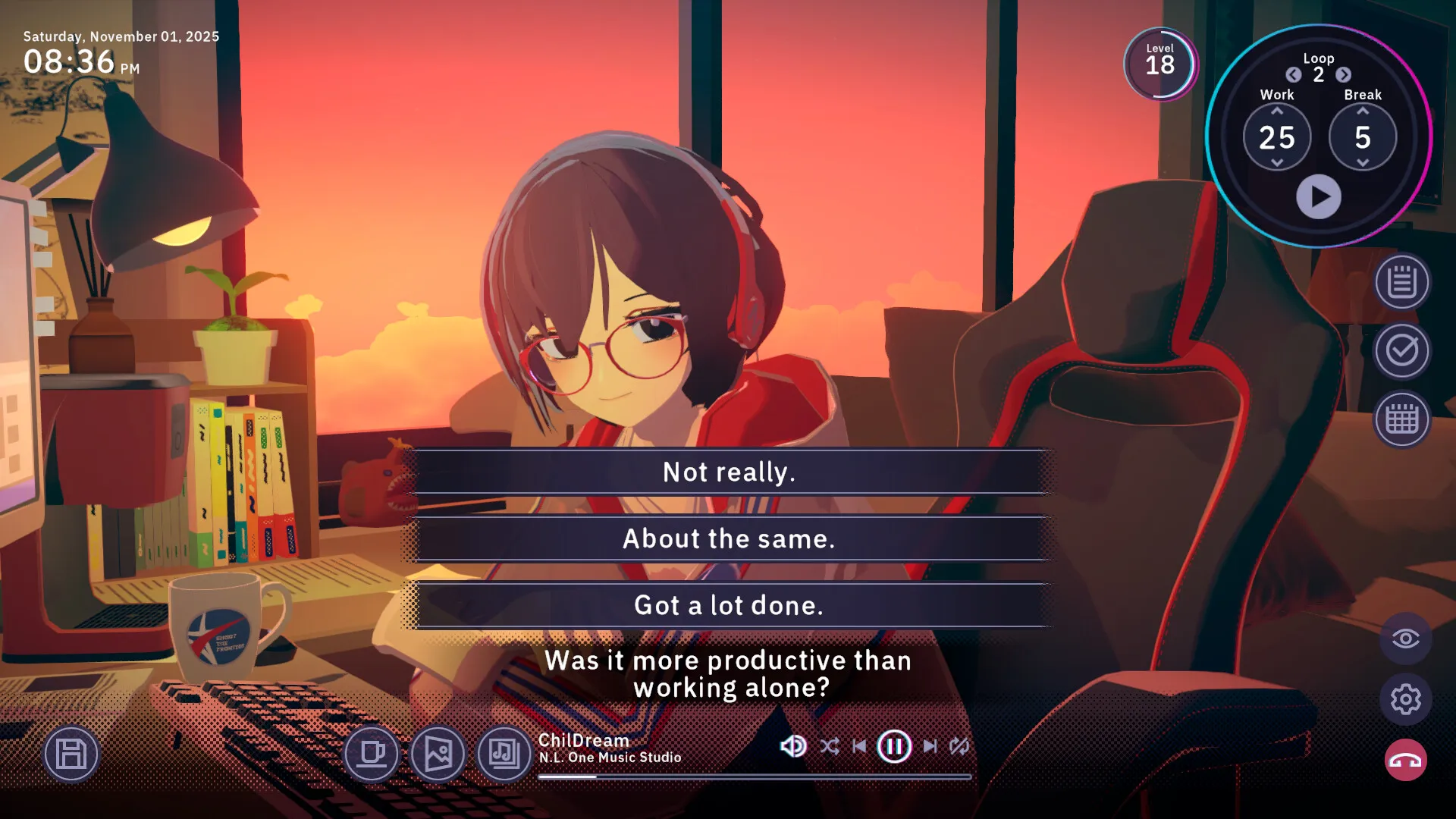
The opening moments of Chill with You : Lo-Fi Story immediately signal restraint.
There are no tutorials, no objectives, and no visible systems demanding optimization. The game refuses to rush the player, allowing silence and stillness to occupy space traditionally filled by instructions.
This absence of urgency forces the player to confront their own expectations, creating discomfort that gradually evolves into acceptance.
2. Passive Interaction as Intentional Design
Unlike idle games that rely on automation, Chill with You emphasizes conscious passivity.
The player is present, but not commanding. Interactions are subtle, often limited to positioning, camera movement, or choosing when to remain still.
Presence over control
Agency is redefined not by what the player does, but by what they choose not to interrupt.
3. Time as the Primary Gameplay Mechanic
Time progresses regardless of player input.
Environmental changes occur slowly: lighting shifts, music transitions, ambient sounds evolve. These changes reward patience rather than action.
Temporal trust
The game trusts the player to remain without incentives, an unusual contract in modern design.
4. Lo-Fi Music as Structural Feedback
Music in Chill with You is not decorative.
Tracks transition based on time spent, emotional pacing, and environmental states. The soundtrack acts as a feedback system rather than a reward loop.
This transforms listening into a form of participation, where attention becomes the core mechanic.

5. The Companion as Emotional Anchor
The silent companion present throughout the experience is neither guide nor objective.
They exist as a constant, grounding presence that reinforces intimacy without dialogue or instruction.
Shared stillness
The lack of explicit interaction strengthens emotional projection, allowing players to fill silence with meaning.
6. Minimalism and Cognitive Relief
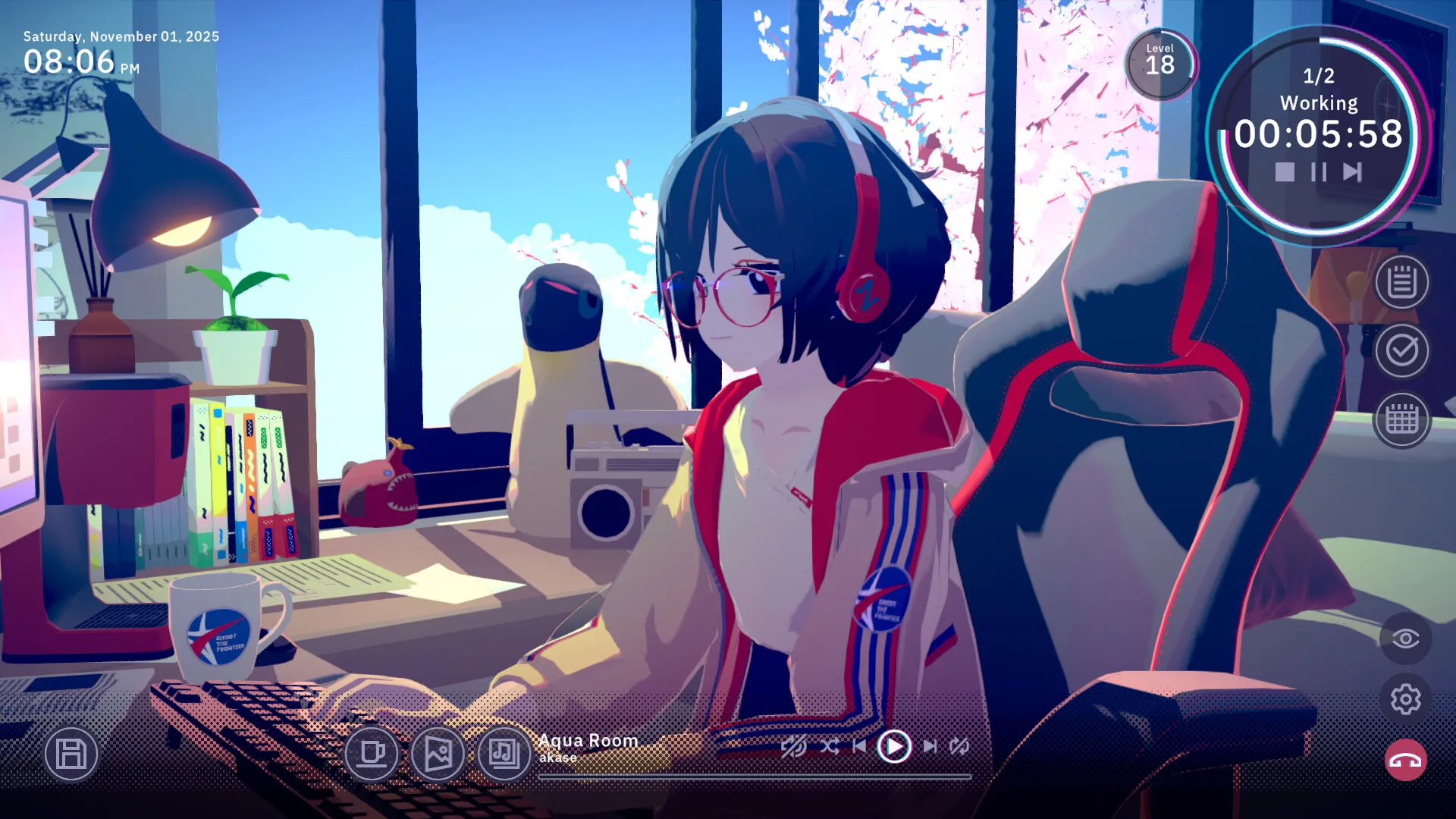
The visual design avoids clutter, icons, and UI distractions.
This minimalism reduces cognitive load, encouraging relaxation rather than decision fatigue.
Designing for rest
The game acknowledges exhaustion as a player state and designs around recovery instead of stimulation.
7. Narrative Through Environmental Continuity
There is no traditional plot progression.
Instead, narrative emerges through repetition, subtle changes, and environmental continuity across sessions.
Players build personal narratives through memory rather than scripted events.
8. Player Agency Without Consequence
Actions do not lead to success or failure.
This removes performance anxiety, allowing players to engage without fear of optimization loss.
Safe interaction space
Agency becomes expressive rather than evaluative, shifting focus to mood and presence.
9. Emotional Regulation as a Game Outcome
Extended sessions often produce calm, introspection, or mild melancholy.
These emotional states are not side effects but intended outcomes.
Games as emotional tools
Chill with You functions closer to a mindfulness exercise than traditional entertainment software.
10. Redefining What It Means to “Play”
Chill with You challenges the industry’s fixation on engagement metrics.
By embracing stillness, it argues that games can exist as shared spaces rather than systems to conquer.
This reframing positions the player not as a performer, but as a participant in atmosphere.
Conclusion
Chill with You : Lo-Fi Story is not about achievement, progression, or mastery. It is about permission—permission to exist within a digital space without obligation. Through passive interaction, temporal pacing, and emotional minimalism, the game redefines agency as presence rather than control. In doing so, it expands the boundaries of what games can offer, proving that silence, patience, and companionship can be as meaningful as action.