.webp)








At first glance, Whiskerwood presents itself as a charming colony-building game populated by anthropomorphic animals and wrapped in a warm, illustrated aesthetic. The art direction suggests comfort, creativity, and a low-stress sandbox where players guide a woodland society toward prosperity. However, extended play reveals a far more demanding structure beneath the surface. Whiskerwood does not merely ask players to optimize production chains or expand settlements efficiently. Instead, it places them in continuous moral tension, where every system reinforces scarcity, consequence, and responsibility. This article examines how Whiskerwood’s interconnected management mechanics quietly turn ethical decisions into unavoidable gameplay pressure.
1. The Gentle Opening That Establishes False Security
Whiskerwood’s opening hours deliberately cultivate a sense of safety.
Resources appear plentiful, citizen needs are easily satisfied, and early construction choices rarely punish mistakes. This creates an emotional buffer that encourages experimentation.
However, this early generosity is not accidental. It conditions players to grow attached to their colony before meaningful pressure begins.

2. Population Growth as a Double-Edged System
Inviting new citizens initially feels rewarding.
More workers unlock faster production, broader construction options, and visible settlement growth. The game frames population expansion as progress.
Hidden scaling cost
Each additional citizen compounds food consumption, housing demands, and emotional needs, transforming growth into long-term liability.
3. Labor Allocation and the Cost of Efficiency
Whiskerwood’s labor system encourages specialization.
Assigning citizens to optimized roles increases output but reduces flexibility during crises. Over-specialization leads to fragility.
Efficiency versus resilience
The player must choose between short-term productivity and long-term adaptability, a decision with no optimal solution.
4. Resource Chains That Enforce Ethical Trade-Offs
Advanced buildings require complex production chains.
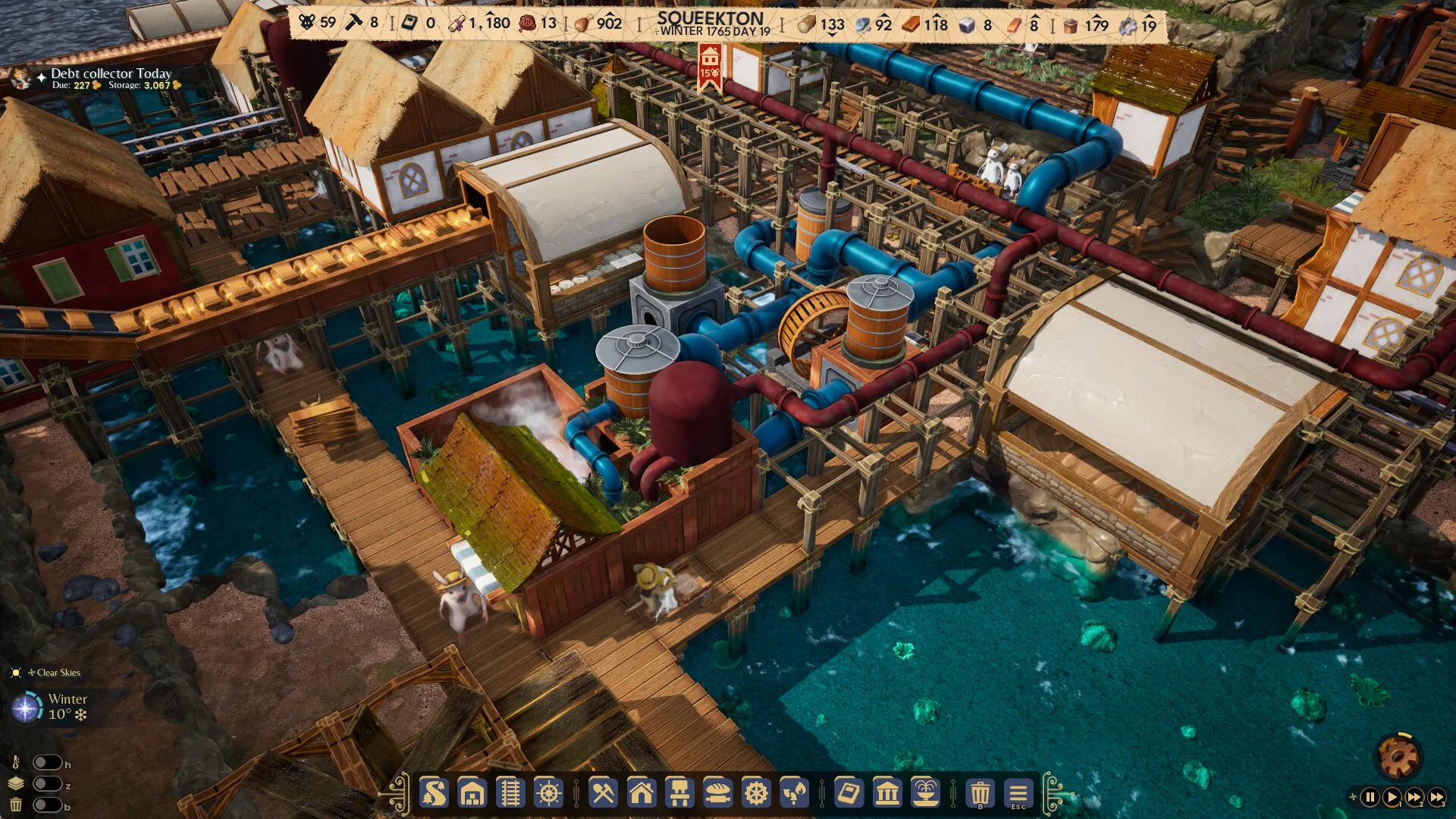
These chains often rely on environmentally invasive structures or morally questionable extraction methods.
The game never labels these choices as good or bad, forcing players to interpret consequence through mechanical feedback rather than narrative judgment.
5. Housing, Comfort, and Psychological Management
Citizens in Whiskerwood require more than shelter.
Comfort levels affect productivity, morale, and population stability. Neglecting these systems leads to subtle but cascading failures.
Invisible suffering
The absence of dramatic punishment masks systemic collapse until recovery becomes difficult.
6. Seasonal Pressure and Predictive Responsibility
Seasons radically alter resource availability.
Winter shortages punish short-sighted planning, while surplus seasons test restraint and storage discipline.
Delayed consequence design
The game teaches responsibility by separating action from outcome, ensuring players feel the weight of earlier decisions.
7. Automation and the Illusion of Control
Mid-game automation tools promise relief.
While they reduce micromanagement, they also distance the player from immediate feedback, increasing risk.
Delegated failure
Automated systems fail quietly, often revealing problems only after damage has accumulated.
8. Crisis Events and Moral Compression
Random events force rapid decision-making.
Choices often involve sacrificing efficiency, comfort, or specific citizens to preserve the colony.
These moments compress morality into mechanics, eliminating time for roleplay and demanding pragmatic judgment.
9. Long-Term Stability Versus Expansion Desire
Late-game play introduces expansion opportunities.
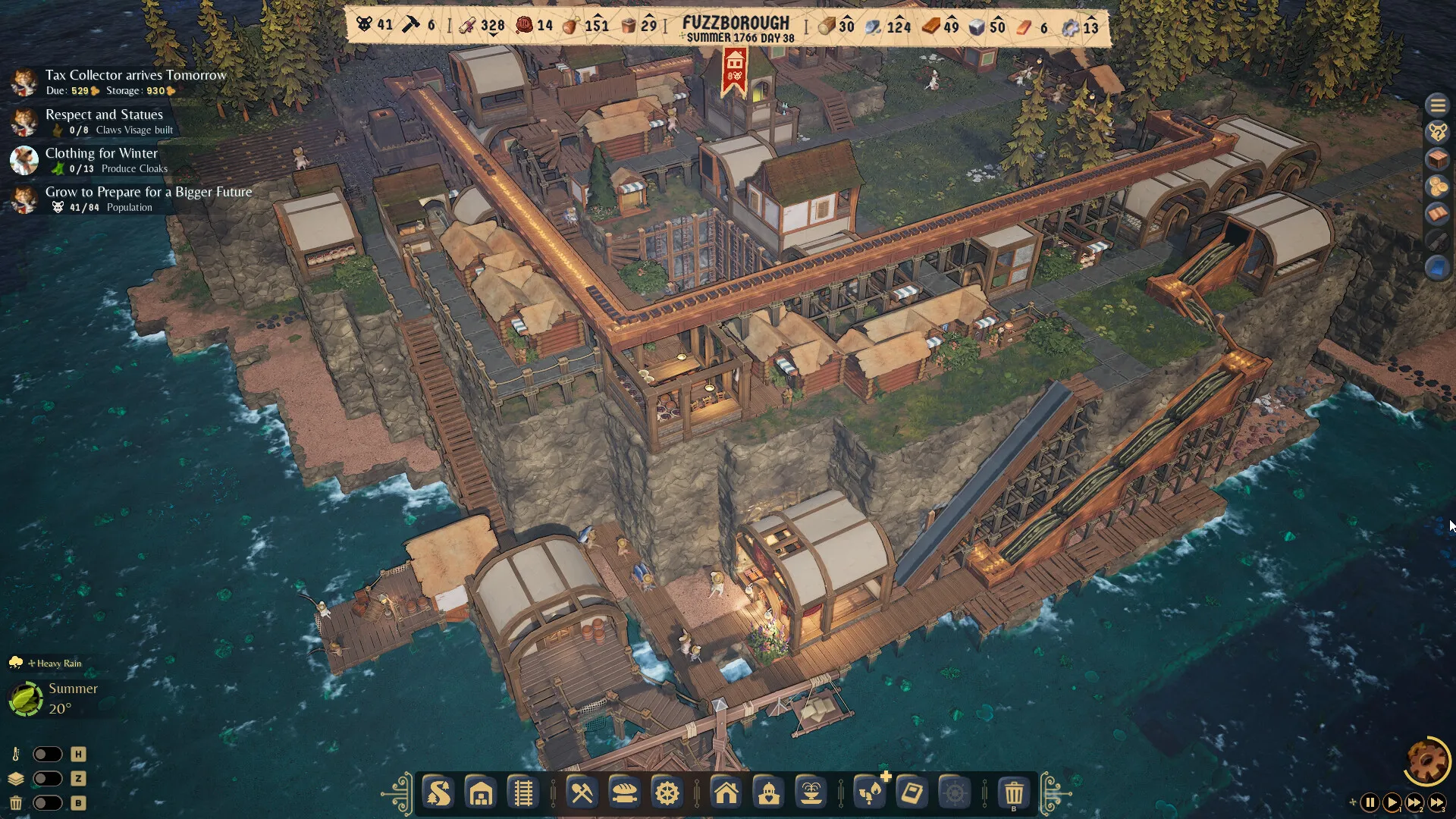
New territories promise rare resources but stretch logistics, defense, and governance.
The temptation loop
Whiskerwood exploits player ambition, rewarding restraint more than conquest despite signaling otherwise.
10. Why the System Feels Personal Despite Abstraction
Despite lacking cinematic storytelling, Whiskerwood feels intimate.
Systemic failures are interpreted emotionally because they affect characters the player nurtured from abundance into scarcity.
This emotional feedback loop transforms abstract numbers into personal responsibility.
Conclusion
Whiskerwood succeeds not by telling players what is right or wrong, but by embedding morality into its systems. Through population scaling, resource scarcity, and delayed consequences, it transforms colony management into a continuous ethical negotiation. The game’s gentle presentation masks a design philosophy that demands foresight, restraint, and accountability. In Whiskerwood, survival is not about maximizing output—it is about understanding the cost of every decision and accepting responsibility for the lives shaped by those choices.