






Guild Wars® Reforged represents a complete reinterpretation of the legendary 2005 MMO, not by expanding its world or rewriting its lore, but by fundamentally re-examining combat flow dynamics—the rhythm, pacing, and decision-making framework that defined its skill-based identity. Unlike modern MMOs that rely on heavy rotations, cooldown stacking, or statistical inflation, Guild Wars® Reforged attempts something far more radical: restoring the razor-sharp tactical precision of the original while rebuilding its mechanical architecture for a new era of action-driven gameplay.
This article focuses on one central issue that defines the entire experience:
How Guild Wars® Reforged reconstructs its combat flow — not through speed or spectacle, but through deliberate friction, skill-capping, and micro-timing systems — and why these changes matter for modern MMO design.
1. The Core Combat Identity of Reforged
Guild Wars® Reforged begins from a foundational question: What does it mean to fight in the Guild Wars universe? The developers rejected traditional MMO filler mechanics and focused instead on decision density—the number of meaningful actions a player takes per minute. Unlike the original’s 8-skill bar, Reforged implements a dynamic 6-skill architecture designed to preserve tactical weight while reducing mechanical clutter.
The result is a combat identity defined by micro-choices: movement-based protection instead of passive armor, skill windows instead of rigid cooldowns, and timing punishments that encourage precision rather than brute-force spam. This shift transforms even simple encounters into multilayered engagements and preserves Guild Wars’ reputation for intellectual combat.
The Philosophy Behind Fewer Skills
Rather than removing complexity, the reduced skill bar concentrates it. Every slot matters. Every input carries consequence.
Decision Density as a Mechanical Backbone
Instead of rotating skills, players rotate responses, creating a more expressive, adaptive combat flow.
2. The Reforged Micro-Timing Engine
The original Guild Wars used traditional casting times that rigidly matched animation length. Reforged breaks that assumption with a micro-timing engine that separates animation from execution, creating a fluent action combat system without abandoning skill-based pacing.
Players now operate in timing bands—0.15-second windows of advantage or vulnerability depending on movement, direction, and prior skill states. These windows replace cooldown reliance, producing combat that rewards anticipation and punishes reaction.
This micro-timing layer forces players to consider when a skill should land, not simply which skill should be used. For veterans of the franchise, this becomes a familiar—but far deeper—form of tactical management.
3. Skill Flow and Chain Compression
Reforged’s biggest shift lies in skill chain compression—the intentional collapsing of multi-step actions into unified, responsive sequences. Instead of activating three separate chase, damage, and finish abilities, certain professions now perform a trajectory-linked chain depending on player input direction and timing.
This compression creates smoother combat flow while maintaining the signature tactical limitations. For example, an Assassin’s Shadow Chain no longer requires rigid activation. Instead, the game interprets the player’s intention based on micro-movement, enabling fluid transitions without sacrificing risk/reward dynamics.
The result is more cinematic combat without relying on animation-locked abilities or forced combos.
4. The Return of Energy Management
Guild Wars made energy management a central strategic pillar. Reforged restores and expands it through dual-resource gating:
- Active Energy (regenerates through aggression and timing)
- Passive Will (accumulates through positioning, interrupts, and tactical victories)
Players must juggle both, creating a combat ecosystem that punishes sloppy resource use. High-impact abilities require careful manipulation of Will, returning the cerebral depth that made the franchise iconic.
When Resources Define Identity
Warriors thrive on Active Energy. Mesmers weaponize Will. Elementalists balance both.
Anti-Spam Design
Every mechanic discourages button-mashing. Every mistake has a resource cost.
5. Profession Reforging and Role Elasticity
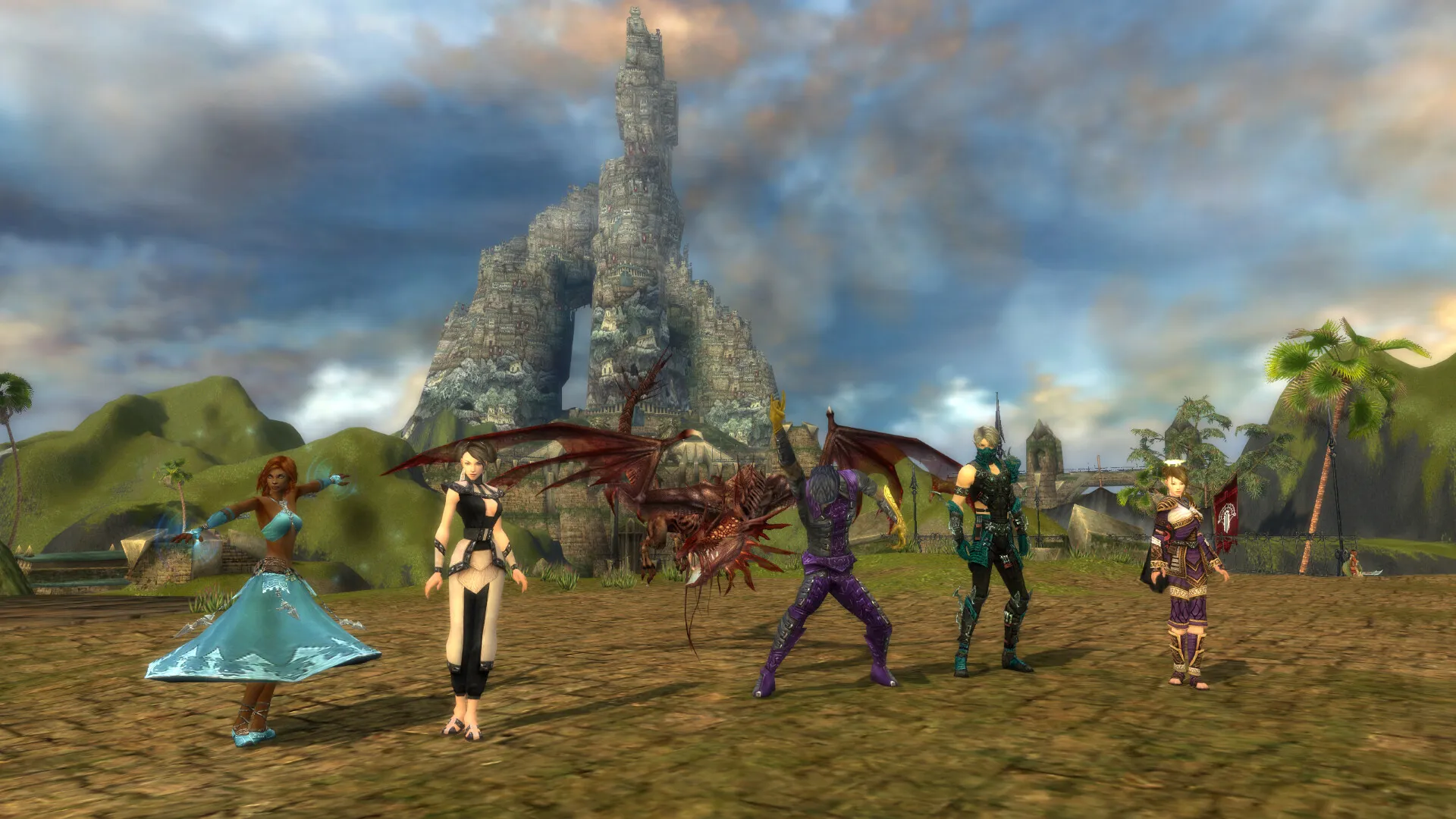
Reforged eliminates strict class roles and instead introduces role elasticity, allowing professions to shift dynamically: tanks become controllers through positioning mechanics; healers become damage amplifiers via timing windows; DPS becomes crowd disruptors through terrain manipulation.
This elasticity is possible due to the advanced micro-timing engine and dual-resource system. Instead of rigid roles, players define their utility through tactical choice and adaptation mid-combat.
This makes cooperation emergent rather than forced—teams function organically based on moment-to-moment needs, making encounters more dynamic and replayable.
6. Encounter Design in a Timing-Driven Engine
Bosses and mobs in Reforged are built around tempo modulation, meaning they accelerate, stall, or redirect combat flow based on the player’s success rate. If players dominate early phases, enemies adjust their timing patterns to counter muscle memory.
This destroys static “learn the rotation” gameplay. Every fight is about adaptation, not memorization.
Enemy telegraphs are deliberately subtle, blending animation cues with world interaction. Players must read distortion waves, lighting ripples, or audio patterns to anticipate attacks—a design choice borrowed from high-skill action titles.
7. PvP Reimagined: The Tactical Duel Era
Guild Wars PvP was legendary. Reforged seeks to revive that glory by creating a competitive environment where:
- micro-timing accuracy determines initiative
- energy manipulation determines pressure
- positional mastery determines survivability
- anticipation beats reaction
The game introduces Friction Zones, areas that modify timing windows and skill costs. Fighting inside these zones becomes a high-risk, high-reward challenge, turning duels into chess matches where terrain and timing intertwine.
In high-rank PvP, matches become tests of rhythm exploitation—reading heartbeat-like combat patterns and breaking them at the perfect moment.
8. Cooperative Synergy and Emergent Team Tactics
Reforged rejects rigid MMO roles and instead encourages emergent synergy, the idea that strategies arise naturally from interaction rather than predetermined classes. Through timing windows, shared resource links, and combo amplification, players build synergy by observing each other’s rhythm.
A Warrior who lands a precise shield bash may open a 0.4-second vulnerability window. An Elementalist reading this cue can fire an amplified skill. A Ranger can split their damage into multi-angle vectors to exploit exposed hitboxes. None of these interactions are scripted—they emerge from player timing.
This transforms dungeons and raids into orchestras of coordinated improvisation.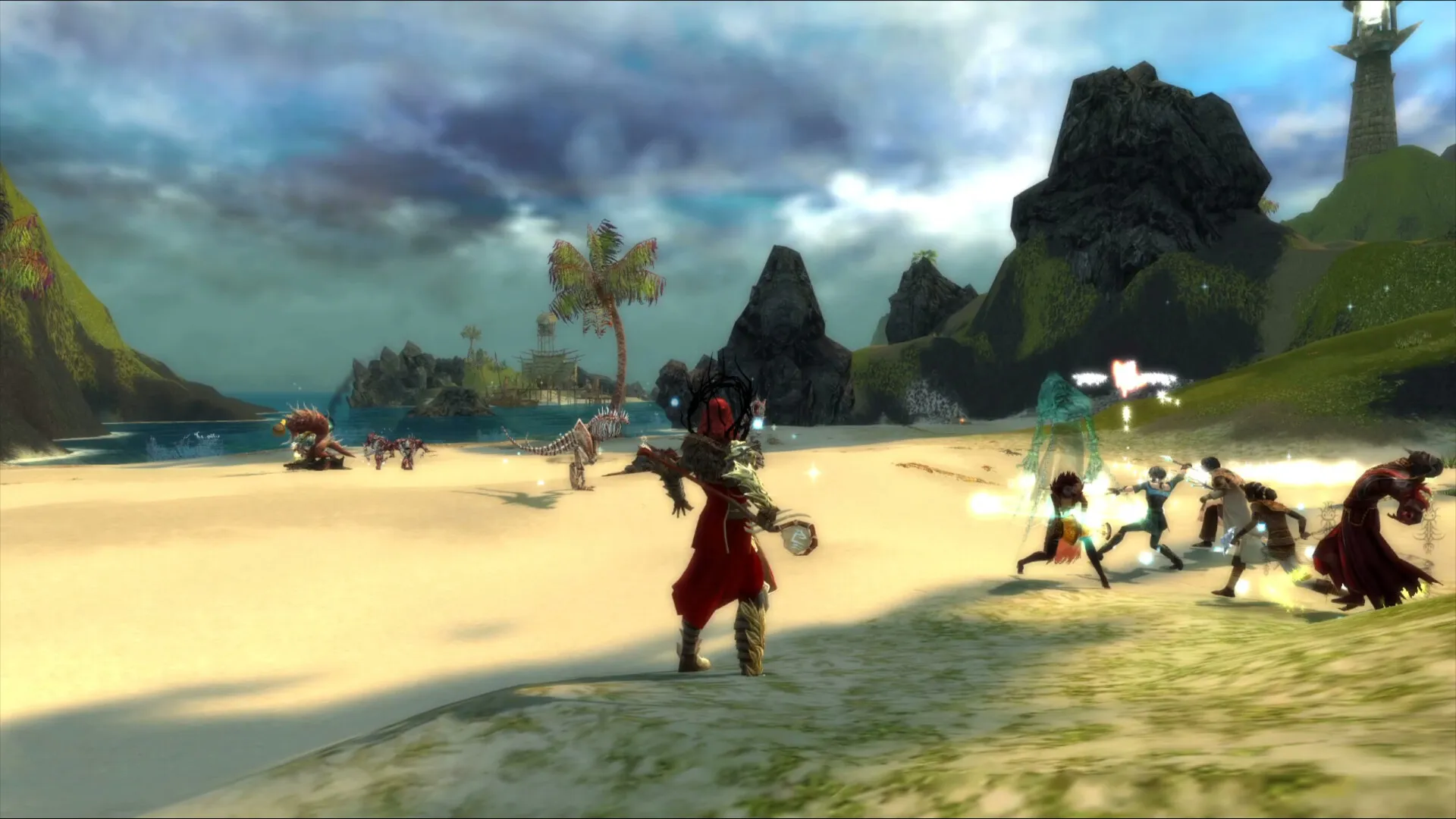
9. The Friction Philosophy: Why Reforged Feels Different
Reforged's design is built around a single concept: friction creates mastery.
Modern MMOs remove friction to appeal to casual players. Reforged reintroduces it with intention:
- Delayed skill windows require foresight
- Energy thresholds demand planning
- Movement friction punishes careless dodging
- Timing friction rewards discipline
- Positional friction amplifies strategic knowledge
This friction isn’t artificial difficulty—it is the texture that gives combat meaning. Without friction, actions feel hollow; with friction, every choice feels earned.
10. Conclusion – Reforged as a Blueprint for Future MMOs
Guild Wars® Reforged stands as a rare experiment: a game that revives classical tactical MMO combat while modernizing it through timing systems, resource redesign, and emergent synergy. Instead of inflating numbers or adding spectacle, it evolves by deepening player decision-making.
By making combat more readable, expressive, adaptive, and punishing, Reforged preserves what made Guild Wars special while carving a path for future MMO design—one focused not on excess, but on precision, discipline, and tactical mastery.