.webp)
MARVEL Cosmic Invasion marks a radical new direction for Marvel games. Rather than leaning solely on action combat, open-world exploration, or cinematic storytelling, this title attempts something far more ambitious: merging real-time hero combat with macro-level cosmic strategy. Heroes do not simply punch, blast, or swing their way through enemies; they must manage multiversal incursions, deploy tactical units, reinforce collapsing realities, and coordinate strikes across entire dimensions.
This article focuses on one specific, deeply complex issue at the heart of MARVEL Cosmic Invasion:
the Multiversal Convergence System — the gameplay mechanic that controls reality collapse, enemy invasions, timeline distortions, and strategic decision-making.
The Multiversal Convergence is the single mechanic that defines the rhythm, stakes, and intensity of the entire game. Understanding how it functions reveals how Cosmic Invasion blends action and strategy into a unified, high-pressure experience.
1. The Foundations of the Multiversal Convergence System
The Multiversal Convergence System (MCS) acts as the spinal cord of the entire game. Every mission, enemy faction, hero rotation, and strategic decision stems from one core rule: multiple realities are being invaded simultaneously, and the player cannot save all of them. This creates controlled stress, forcing meaningful decisions instead of simple content clearing.
While many Marvel games revolve around localized threats, MCS forces the player to operate on multiple planes. One universe may be experiencing a Kree planetary siege, while another universe suffers dimensional tearing from Dormammu’s Dark Dimension. The system ensures that players cannot camp in one timeline—urgent crises force constant adaptation.
Why Marvel Needed a System Like This
Traditional superhero games struggle to justify difficulty. MCS solves this by making the threat scale with player success.
Strategic Scarcity as a Core Identity
Not every incursion can be extinguished. The game’s tension lives in what the player fails to save
2. Timeline Instability and Mission Pressure Loops
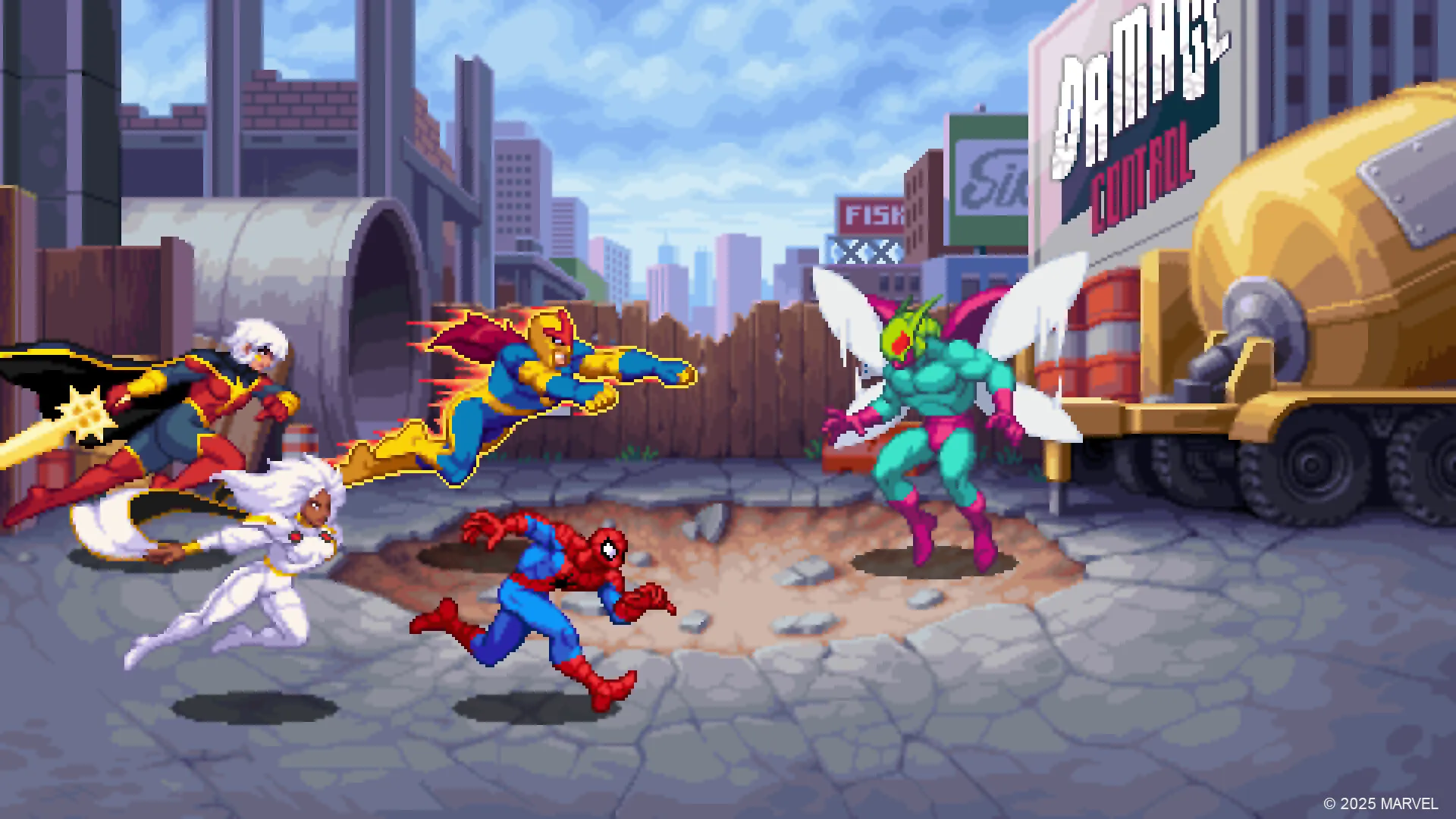
Each universe has an Instability Meter. When instability crosses certain thresholds, new crises erupt: wormholes open, villains spawn, or catastrophic events accelerate. These pressure loops create the game’s pacing, dynamically adjusting difficulty based on player decisions.
For example, ignoring Earth-1610 for too long causes the reality to fracture, summoning Ultimatum forces that spread into adjacent dimensions. MCS tracks every delay, every misstep, and every successful defense. The system therefore creates a non-linear campaign where no two players experience the same sequence of crises.
The brilliance lies in how the instability integrates with combat. High instability grants enemies buffs—temporal duplicates, quantum armor, accelerated cooldowns—while low instability gives players more time to prepare.
3. Strategic Hero Deployment and the Scarcity of Power
In MARVEL Cosmic Invasion, heroes are not simple “pick and play” options. Each deployment locks a hero in a timeline for a fixed duration. Sending Captain Marvel to Universe-19999 means she cannot return instantly; spatial displacement weakens her ability to cross realities freely.
This creates hero scarcity, a mechanic rare in Marvel games. It forces strategic thinking:
Should you send Doctor Strange to reinforce collapsing dimensions, or keep him available to counter magical threats elsewhere?
This hero-locking mechanic increases narrative immersion while adding resource tension. Even the strongest heroes cannot be everywhere at once.
4. Real-Time Combat and Macro Strategy Integration
Cosmic Invasion blends two very different gameplay modes:
- real-time superhero action combat, and
- cosmic-scale tactical command.
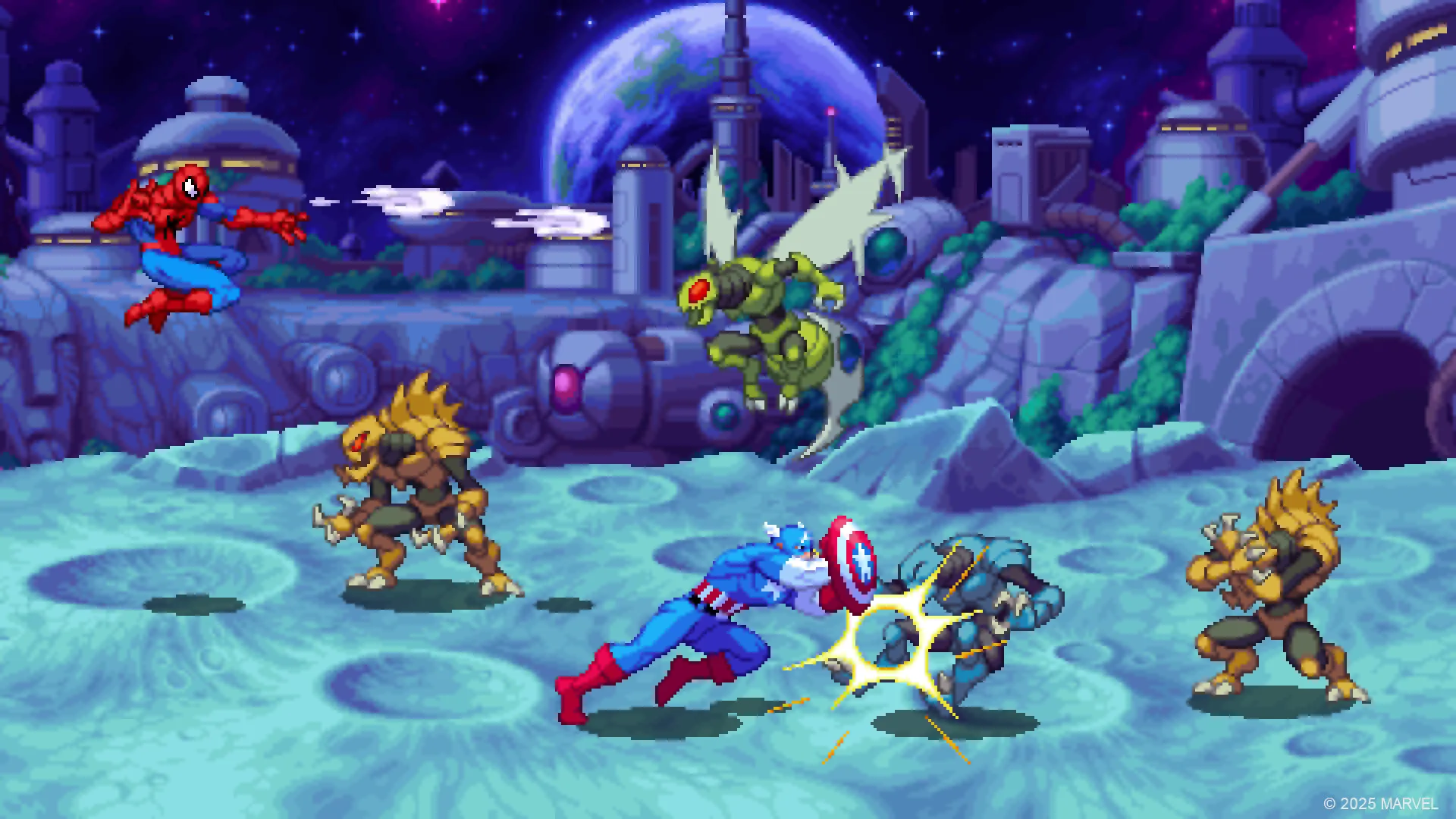
The challenge was integrating them without making one overshadow the other. MCS’s solution is elegant: every action in one mode directly affects the other. Winning a ground fight stabilizes timelines, while losing a battle accelerates cosmic collapse.
Example: Spider-Man defeating a Nexus Rift Guardian reduces instability by 7%. Conversely, retreating from the same encounter might increase instability by 12% and spawn a larger incursion later. The player constantly feels the weight of their performance.
5. Faction AI and Multiversal Invasion Logic
Enemy factions in Cosmic Invasion do not behave like standard mobs. Each faction has a multiversal invasion logic defined by its narrative identity. Skrulls infiltrate and replicate structures; Kree deploy war fleets; the Brood infest planetary systems; Dark Dimension demons corrupt entire areas.
Each faction interacts with instability differently:
- Kree use instability to open military portals
- Symbiotes amplify instability to spawn apex forms
- The Brood multiply faster in highly unstable universes
- The Dark Dimension invades collapsing universes first
This ensures every incursion feels different, requiring adaptive strategy instead of repetitive grinding.
The Importance of Narrative-Driven AI
Each faction behaves like its comic counterpart, reinforcing immersion and authenticity.
6. Reality Crossfire Events and Multi-Stage Threats
One of the most innovative features is the Reality Crossfire event type. This happens when instability spikes in two universes simultaneously, causing invasions to overlap. The player must decide which threat to prioritize, since ignoring one triggers catastrophic side-effects in the other.
These events create paradox bosses, fusion enemies that combine the abilities of multiple factions. A Brood-infected Kree Accuser or a Symbiote-possessed Celestial are examples of high-tier anomalies that emerge from crossfire events.
The unpredictability dramatically increases replay value, as no two events unfold identically.
7. The Role of Nexus Anchors and Dimensional Engineering
To slow the multiversal collapse, players must construct and manage Nexus Anchors—structures that stabilize universes by reducing collapse velocity. However, these structures require resources collected during battles, exploration, or incursion defense.
Nexus Anchors create strategic trade-offs:
Invest too many resources in stabilizing one universe, and others will suffer.
Build too few, and instability spirals out of control.
The Anchors can also be destroyed during enemy mega-incursions, forcing players to defend crucial infrastructure in addition to fighting villains.
8. Hero Sync Bonds and Multiversal Team Synergy
Cosmic Invasion introduces Hero Sync Bonds, a system that rewards pairing certain heroes together across universes. These bonds are formed through narrative missions, personality compatibility, and shared history.
For example:
- Thor and Captain Marvel provide cross-timeline energy surges
- Scarlet Witch and Doctor Strange create anti-chaos shields
- Spider-Man and Iron Man generate tech-web traps that slow incursions
Bonds increase combat potency, reduce instability decay, or unlock new responses to cosmic threats. This system adds emotional weight to hero selection, making every pairing feel meaningful.
Why Sync Bonds Improve the Formula
They make team-building strategic—not just a matter of raw power, but relational synergy.
9. Difficulty Scaling and Player-Driven Catastrophe
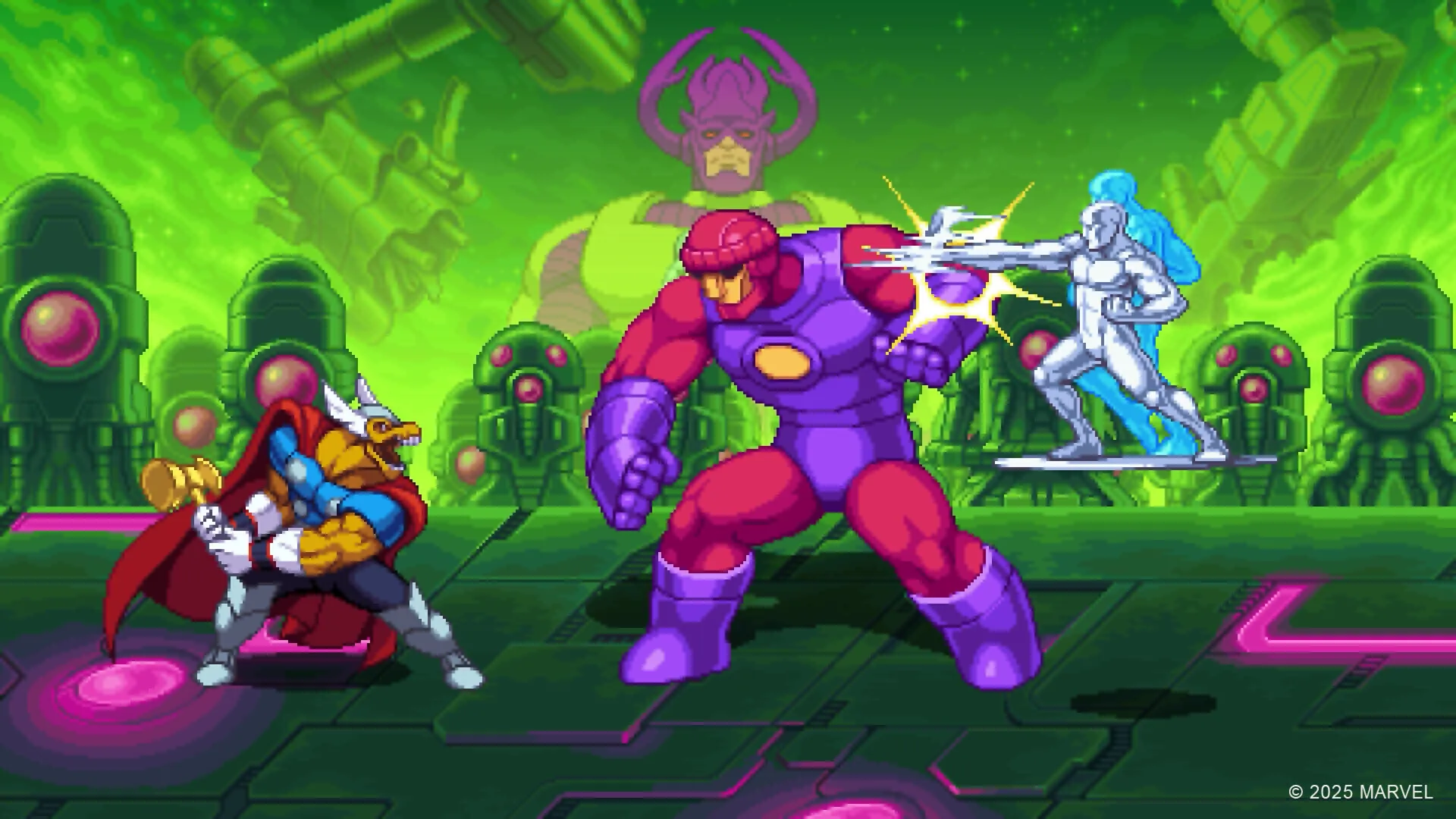
The difficulty in Cosmic Invasion is not adjustable via menus. Instead, the game’s difficulty is defined by player performance. MCS tracks:
- crisis response speed
- hero losses
- battle success rate
- resource allocation
- timeline stability
- synergy optimization
- faction elimination efficiency
Poor decisions create spiraling chaos. Smart decisions maintain cosmic balance. Difference becomes increasingly drastic mid-campaign.
This system produces player-driven catastrophe, a rare design choice that ensures every failure carries narrative and mechanical consequences. The world does not wait for the player to get better; the player must evolve or face extinction.
10. Conclusion – The Legacy of the Multiversal Convergence System
MARVEL Cosmic Invasion stands apart from typical Marvel games because of its willingness to introduce genuine strategic pressure. The Multiversal Convergence System transforms hero gameplay from power fantasy into problem-solving — a constant negotiation between immediate action and cosmic-scale consequence.
By merging micro-level action with macro-level strategy, the game redefines what a Marvel title can be. It emphasizes responsibility, judgement, and sacrifice, capturing the true spirit of Marvel storytelling.
Cosmic Invasion is not just about defeating enemies; it's about preserving existence through discipline, prioritization, and tactical brilliance.